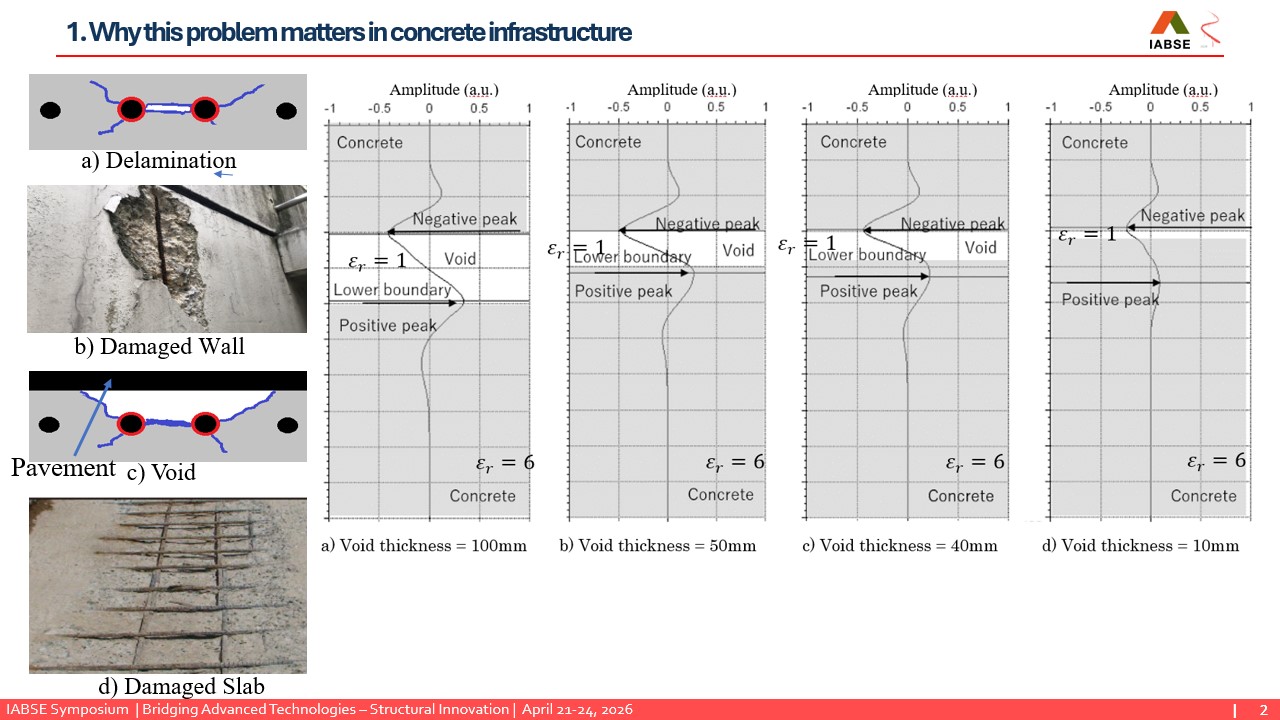
Delamination and voids inside concrete are serious problems in infrastructure. These defects reduce structural performance. Therefore, early detection and evaluation of void thickness are important for maintenance planning.
GPR is a promising non-destructive method because microwave can penetrate concrete. However, conventional time-domain methods often have difficulty when the void is thin.
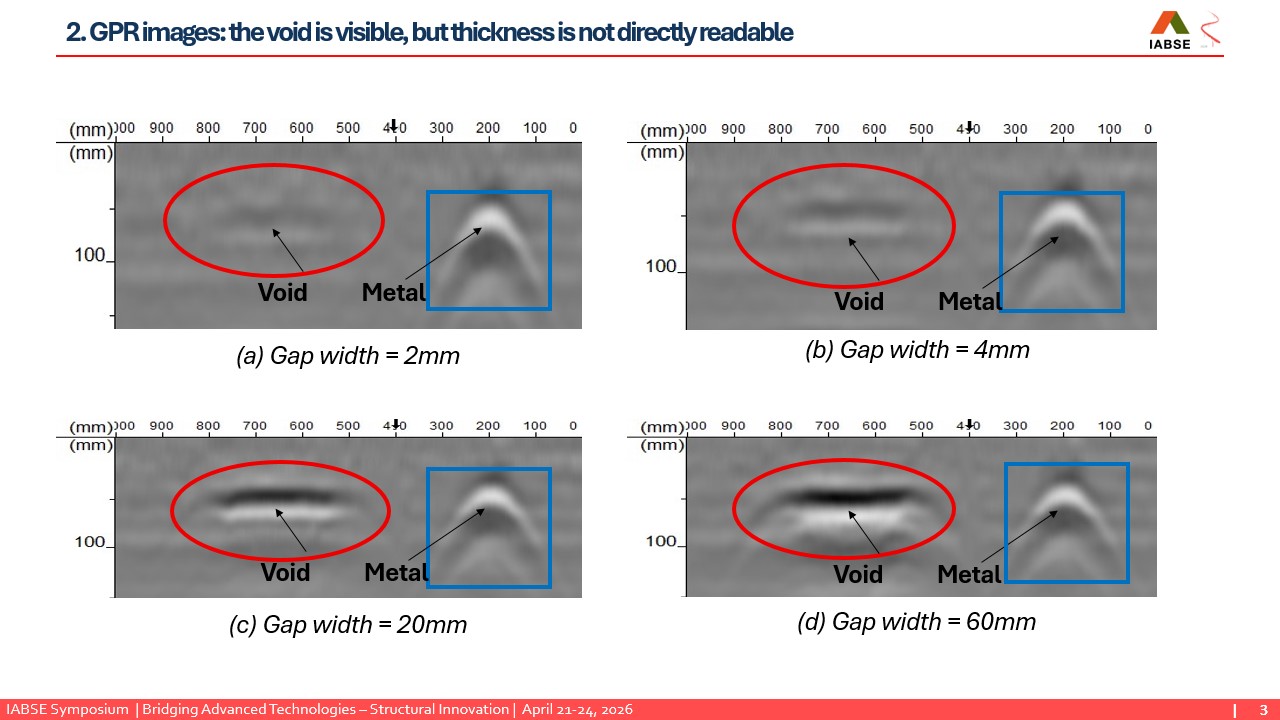
This slide shows examples of time-domain data for several void thicknesses. The void region and the metal reflection can be observed in these images.
However, in the time-domain data, it is difficult to estimate the void thickness directly. This is because the reflected signals overlap strongly. So, the time-domain information alone is not sufficient for reliable thickness estimation in this range. This is the reason why we used to frequency-domain analysis.
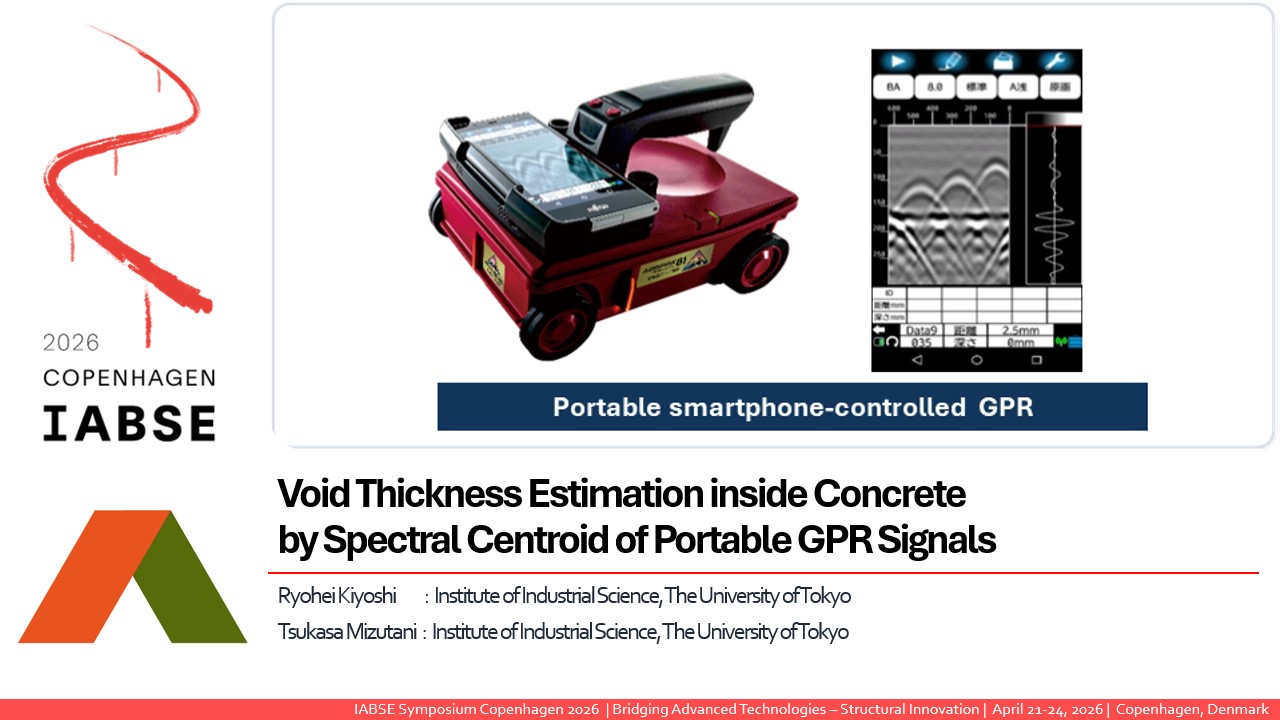
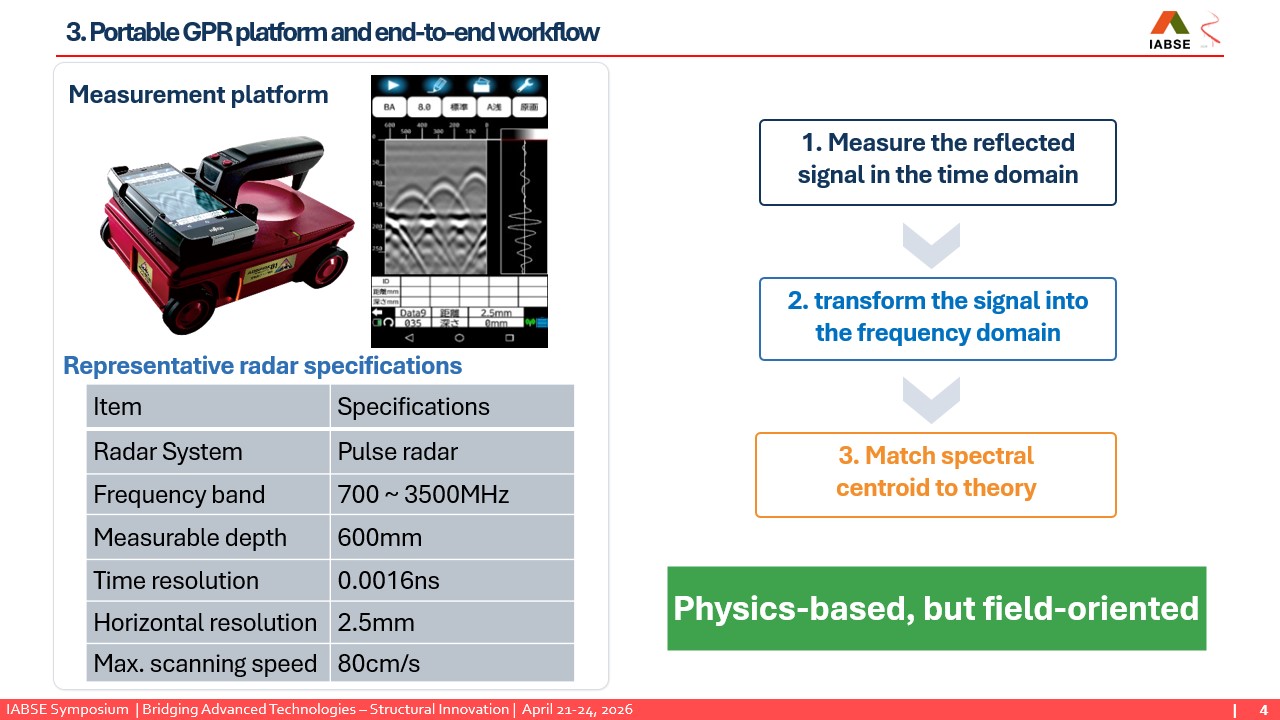
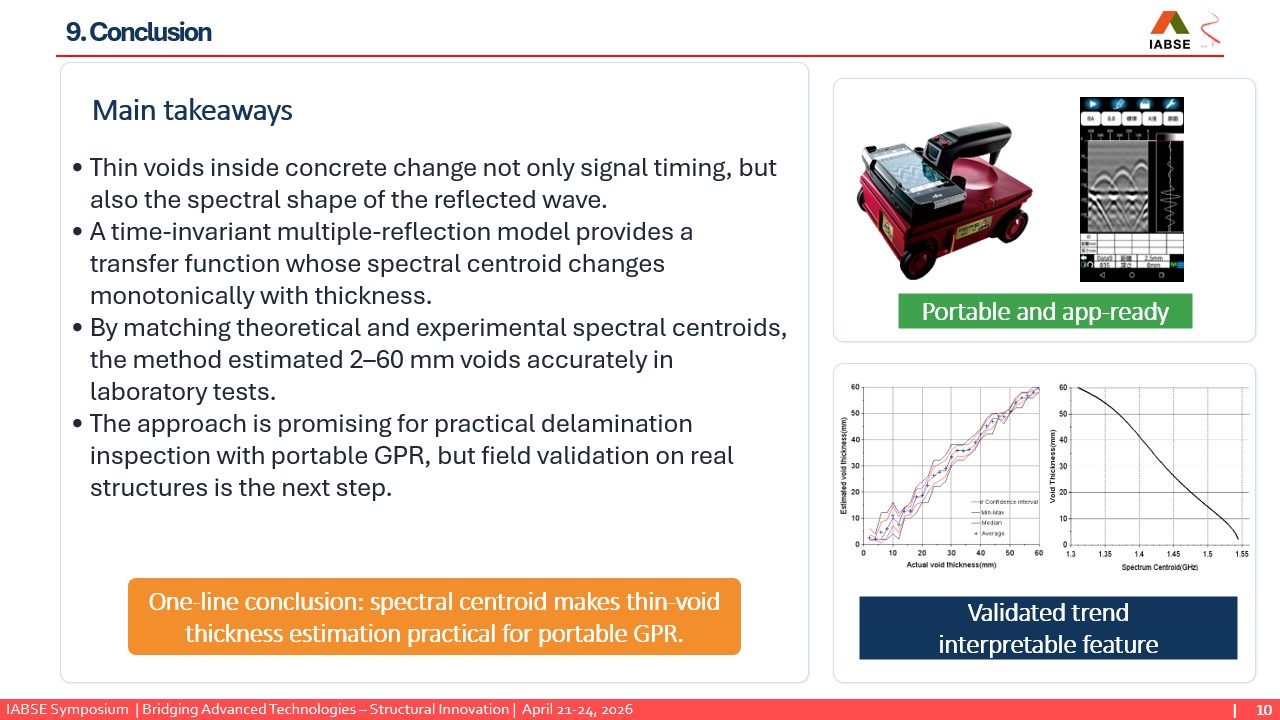
In this study, we used a smartphone-controlled portable GPR system. This system is practical for field use because it is compact and easy to operate. Another advantage is that the algorithm can be implemented in a smartphone application.
The basic workflow is this. First, we measure the reflected signal in the time domain. Next, we transform the signal into the frequency domain. Then, we calculate the spectral centroid and compare it with the theoretical relationship to estimate the void thickness.
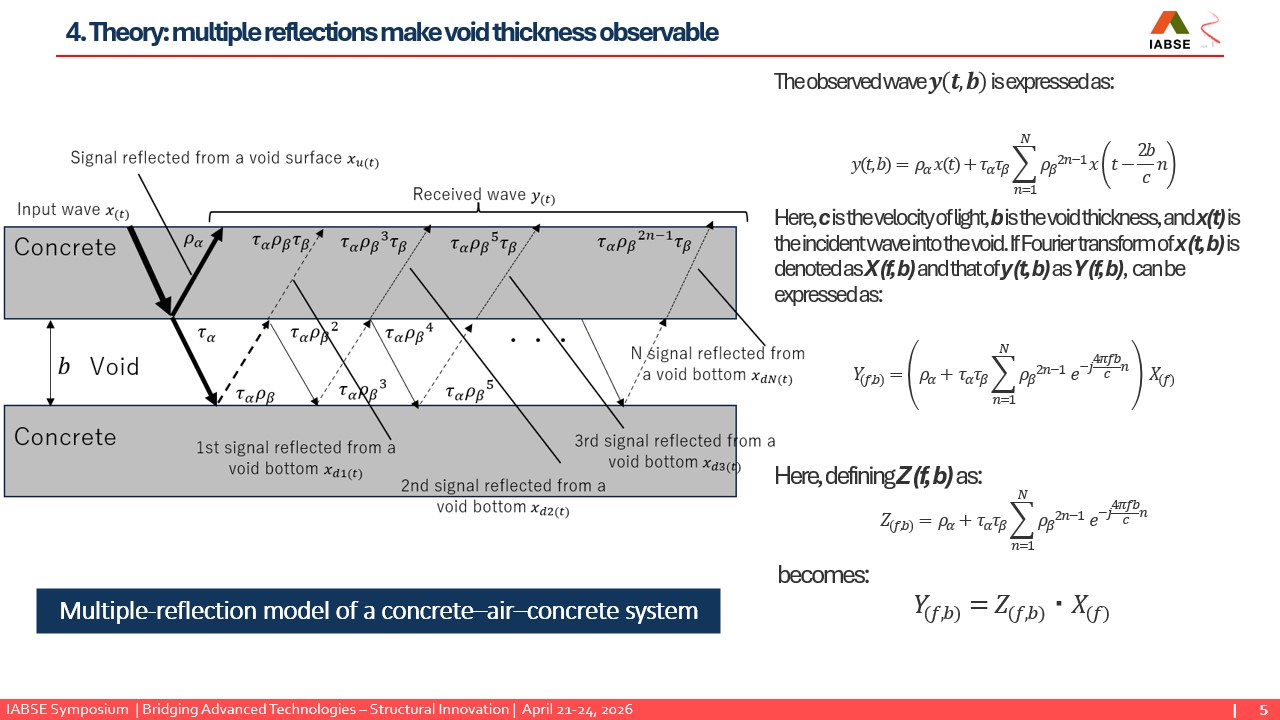
Here, I explain the basic theory. When a void exists inside concrete, the microwave is reflected not only at the top interface of the void, but also multiple times between the top and bottom interfaces. These multiple reflections affect the frequency characteristics of the received signal.
Based on this phenomenon, we formulated the reflected wave using a multiple reflection model. Then, we defined a transfer function that depends on the void thickness. This transfer function is the key to linking the measured signal and the target thickness.
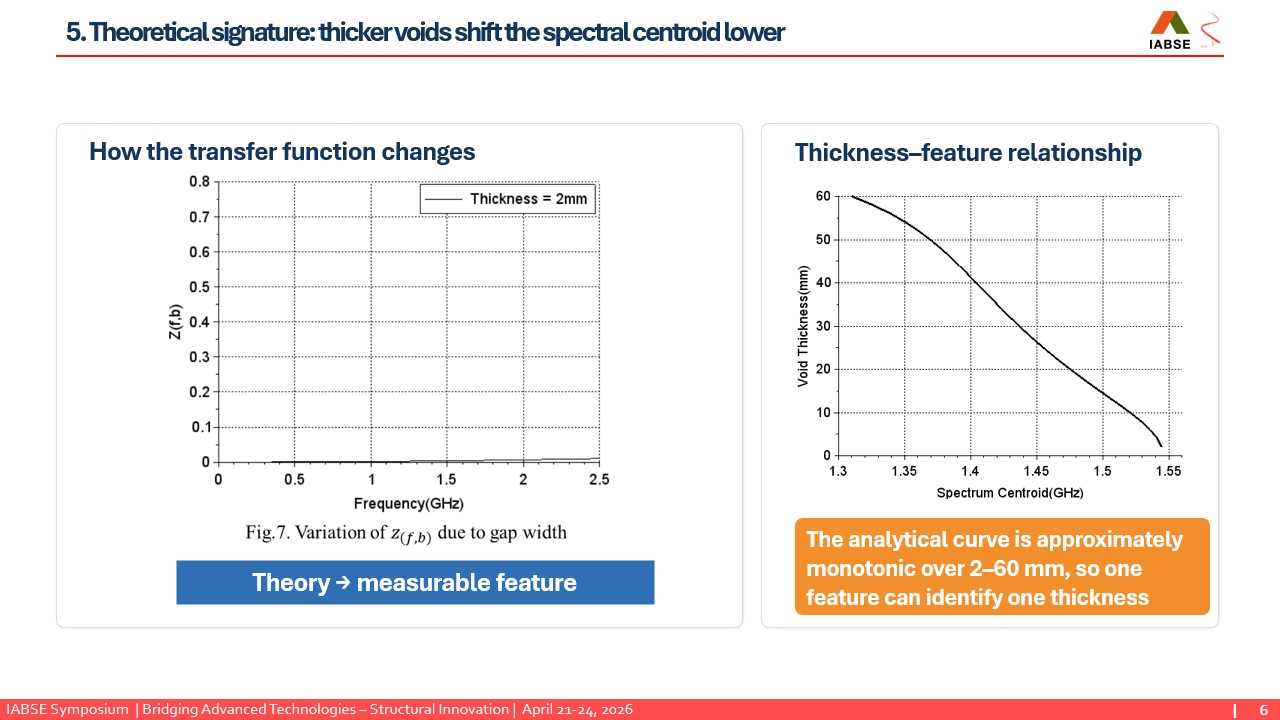
From the theoretical transfer function, we calculated how the spectrum changes as the void thickness increases. The important observation is that the spectral shape is gradually compressed in the frequency direction, and the centroid shifts toward lower frequencies.
So, in this study, we used the spectral centroid as a feature to characterize this shift. The spectral centroid is a weighted average of frequency, and it is simple to calculate.
Our theoretical results showed an approximately linear relationship between the spectral centroid and the void thickness. This means that the void thickness can be estimated from the spectral centroid in principle.
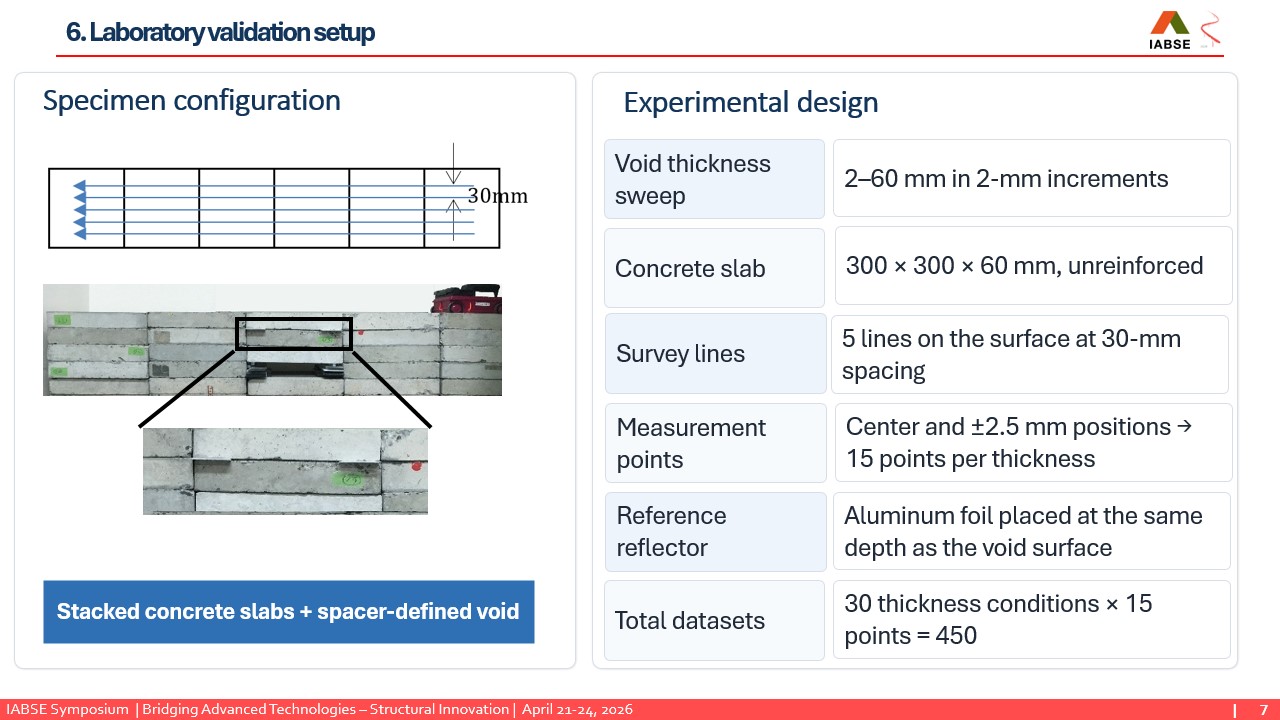
To validate the method experimentally, we prepared concrete specimens by stacking concrete slabs. A void was created by inserting plastic spacers between the upper and lower. The void thickness was changed from 2 to 60 millimeters in 2-millimeter increments. For each thickness condition, we measured five survey lines on the concrete surface.
This setup allowed us to compare the theoretical model and the experimental data under controlled conditions.
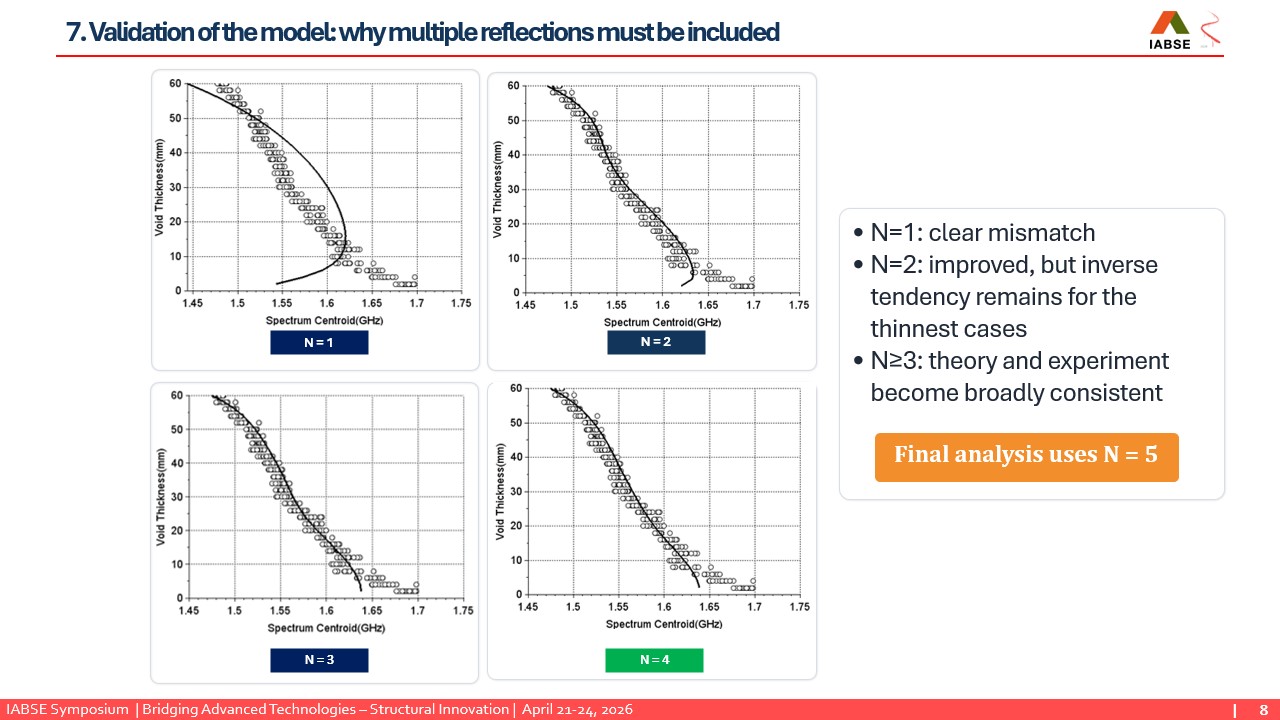
Next, we examined how many orders of multiple reflections should be included in the model. When only the first-order reflection was considered, the agreement between theory and experiment was not sufficient. When second-order reflection was added, the agreement improved, but an inverse tendency still appeared in the thin range.
From the third order, the theoretical and experimental results became much closer. Since little additional change was observed at higher orders, we finally adopted multiple reflections up to the fifth order in the analysis.
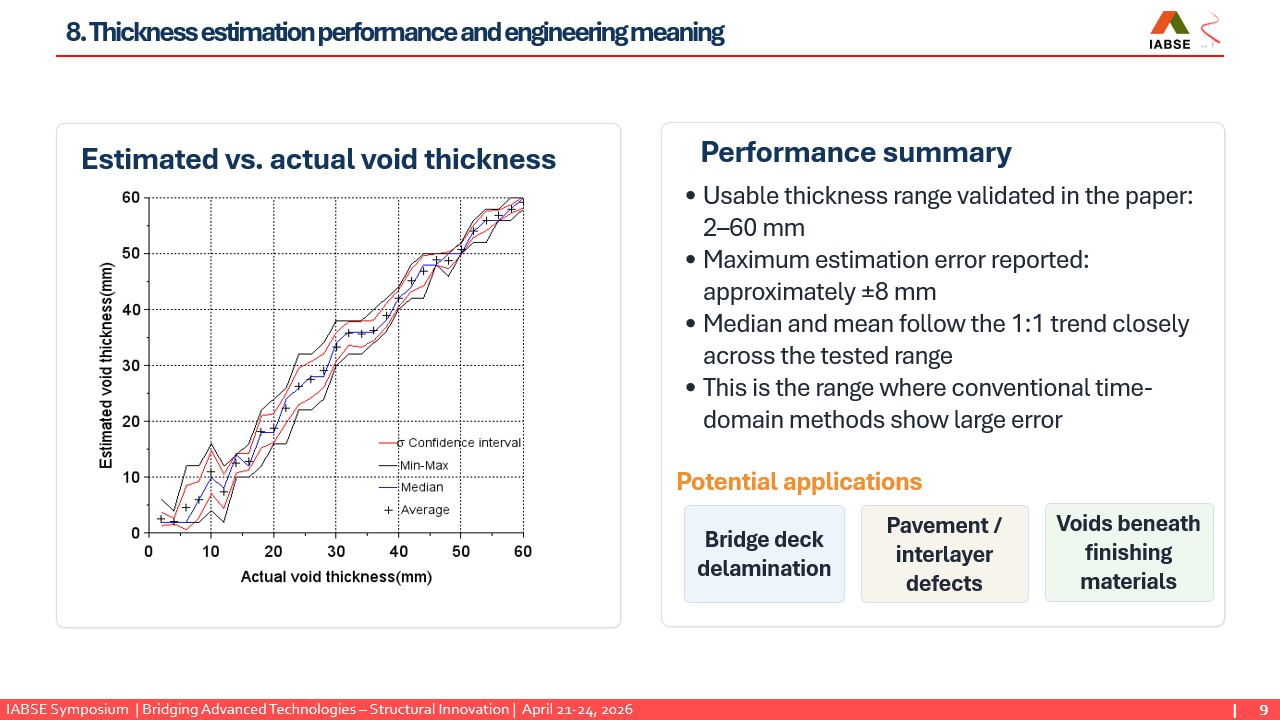
Finally, this slide shows the estimation performance of the proposed method. We compared the measured spectral centroid with the theoretical relationship and estimated the void thickness by minimizing the residual. The method was validated for void thicknesses from 2 to 60 millimeters.
The results showed that the proposed method could estimate thin void thickness with reasonable accuracy. The maximum estimation error was approximately plus or minus 8 millimeters. This result is promising because conventional time-domain methods tend to show large errors in this thickness range.
In conclusion, this study proposed a frequency-domain method for estimating void thickness inside concrete using portable GPR signals. The method is based on a multiple reflection model and uses the spectral centroid as a simple and robust feature.
Both the theoretical analysis and the laboratory experiments showed a clear relationship between spectral centroid and void thickness. The proposed method successfully estimated void thicknesses from 2 to 60 millimeters.
Future work will focus on validation using actual structures and on evaluating the effects of moisture and material variability.